Products & Technologies

Products & Services
Contact
Products & Services
Products & Technologies
Services
Resources
Contact
Posted
December 18, 2025

Stay updated on our content.
A Quantum Leap: Celebrating Dr. John Martinis and the Future of Computing
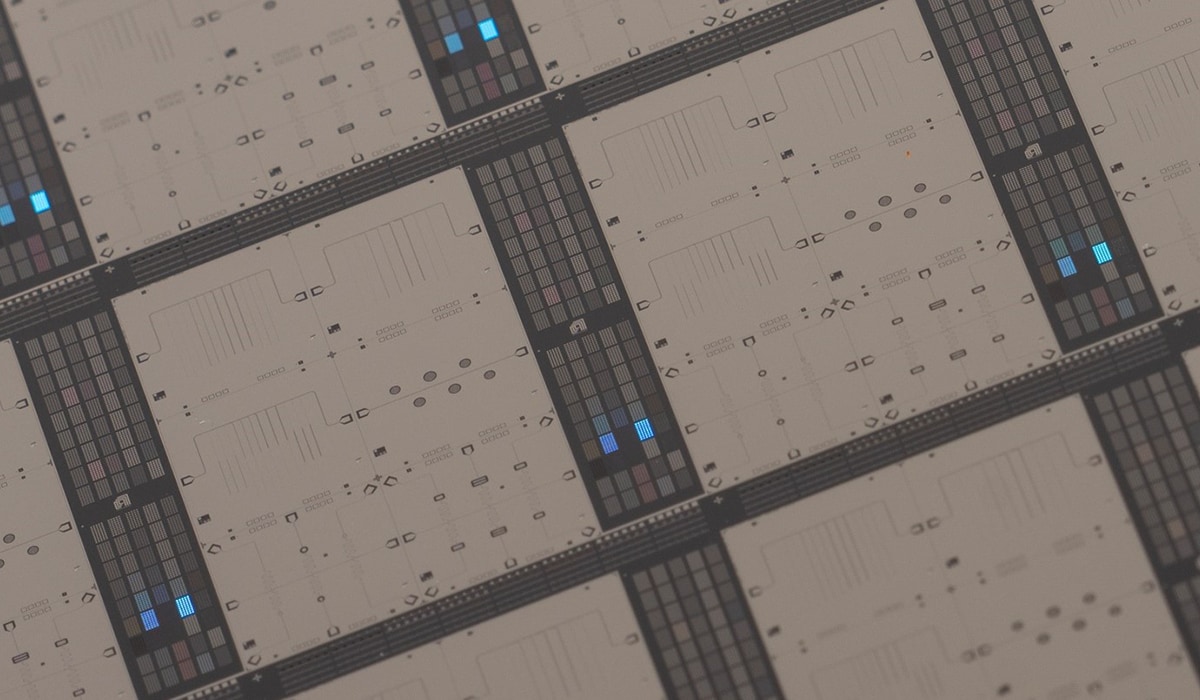
Image of a silicon wafer featuring superconducting qubits
by Om Nalamasu, Prineha Narang and Alan Ho
The 2025 Nobel Prize® in Physics was awarded to Dr. John Martinis, Dr. John Clarke and Dr. Michel H. Devoret for demonstrating macroscopic quantum tunneling and energy quantization in electric circuits. This achievement, decades in the making, couldn’t be timelier. The quantum computing field is experiencing what many are calling its “ChatGPT moment”: a surge in public awareness, investment, and technological breakthroughs. In 2025 alone, we have seen the demonstration of robust experimental and theoretical advances in practical quantum error correction, as well as prototype quantum systems transitioning from experimental stages to real-world deployment. The United Nations has declared 2025 the International Year of Quantum Science and Technology, further underscoring the global significance of this moment.
The groundbreaking research of Dr. Martinis, Dr. Clarke and Dr. Devoret has laid the foundation for superconducting quantum computing as we know it today. Their pioneering work with Josephson junctions – superconducting circuits that exhibit quantum behavior on a macroscopic scale – proved that quantum mechanics isn’t just confined to the atomic realm. It can be engineered into devices we can hold in our hands, opening the door to quantum computers, sensors, and cryptographic systems.
The Path Toward Scalable Quantum Computing
Dr. Martinis, now CTO and co-founder of Qolab, and his team at the company are collaborating with Applied Materials to tackle one of quantum computing’s biggest challenges: scaling superconducting qubits with high coherence and low error rates. Along with many others, they authored a technical roadmap titled “How to Build a Quantum Supercomputer: Scaling from Hundreds to Millions of Qubits”1, which outlines strategies for scalable quantum architectures.
Dr. Martinis has described this collaboration as an inflection point for America's future in quantum computing, highlighting how Applied’s expertise in materials engineering is essential to bridging the gap between quantum research and commercial-scale systems.
“Our collaboration seeks to answer one of the most profound questions in computing: can a quantum system large enough to see and touch be engineered into a scalable quantum computer that is exponentially more powerful than today's classical computer,” he said.
Applied and Qolab are working to solve two scaling problems:
Fabrication uniformity of qubits: Today’s superconducting qantum hardware is limited by quantum quality, uniformity, and scalability. The fabrication of superconducting qubits, much like modern semiconductor technology, requires precise defect control. Leveraging Applied's modern CMOS equipment and know-how in the semiconductor industry, Qolab is concentrating on reducing error rates, increasing coherence times, and increasing uniformity to enable efficient quantum error correction.
Building integrated cryogenic circuits: In the 1960s, Dr. Robert Noyce and Jack Kilby pioneered integrated circuits, solving three critical challenges in electronics scaling: device integration, wiring connectivity, and electrical isolation. This breakthrough accelerated the semiconductor industry and laid the foundation for the IT revolution. Today, Applied and Qolab are adapting advanced CMOS manufacturing techniques for superconducting qubit chips with advanced packaging, targeting an order-of-magnitude improvement in interconnect density and scaling efficiency while minimizing crosstalk.
A Pivotal Moment for American Leadership
The pioneering work of Dr. Martinis, Dr. Clarke, and Dr. Devoret represents more than personal achievement; it’s a symbol of American innovation. With deep roots in UC Berkeley, Yale, and UC Santa Barbara, and now with industry leaders like Applied Materials stepping in, the United States is poised to lead the next wave of quantum breakthroughs.
With its unmatched capabilities in materials engineering, Applied is uniquely positioned to play a critical role in the charter, working together with academia, startups, and global partners to make quantum computing a reality.
Realizing fault-tolerant quantum computation, where millions of physical qubits work together to perform fault-tolerant calculations, is a grand challenge for the field. Materials science will continue to play a crucial role. Atomic-scale control of interfaces and state-of-the-art fabrication techniques that maintain quantum coherence are all essential towards this challenge.
Academic-Industry-Startup Synergy: A Thriving Quantum Ecosystem
The momentum in quantum computing is being fueled by an industry-academia model that’s proving essential for solving foundational challenges and scaling quantum technologies. A prime example of this is the collaboration between Applied Materials, Qolab, and Professor Prineha Narang of UCLA, which demonstrates how materials engineering, quantum hardware innovation, and academic research can converge to address critical issues like qubit coherence, manufacturability, and system scalability.
Across the country, institutions like UCLA, MIT, Stanford, Caltech, University of Chicago, and Purdue are working alongside companies such as AWS, Google Quantum AI, IBM, Microsoft, PsiQuantum, and Quantinuum. These collaborations are supported by national initiatives like Q-NEXT, SQMS, and the Quantum Science Center, which unite hundreds of researchers across dozens of institutions to accelerate quantum innovation.
Building on these initiatives, we also envision the need for a national quantum facility, one that can serve institutions across the country and strengthen U.S. leadership in this field.
Together, these efforts can not only solve technical challenges, but also nurture the quantum workforce, drive innovation, and shape the future of quantum commercialization.
As we celebrate Dr. Martinis and his co-laureates, we also recognize the inflection point we’ve reached in quantum computing. The convergence of scientific recognition, industrial momentum, and strategic collaboration signals a new era and one where quantum technologies will reshape industries, economies, and societies. Applied Materials is proud to be part of this journey.
References
1. How to build a quantum supercomputer: scaling from hundreds to millions of qubits https://arxiv.org/html/2411.10406v1
Nobel Prize is a registered trademark of the Nobel Foundation.
Omkaram Nalamasu, Ph.D.
SVP, CTO Applied Materials, Inc.
President, Applied Ventures, LLC
Dr. Omkaram (Om) Nalamasu is senior vice president and chief technology officer (CTO) of Applied Materials, Inc. He brings extensive experience and passion to the role of CTO, where he leads the development of disruptive products to address new markets and businesses in partnership with the broader technology ecosystem. He has built a world-class team to support Applied’s leadership in materials engineering. He also serves as president of Applied Ventures, LLC, the venture capital fund of Applied Materials, where he oversees strategic investments in early- and growth-stage companies.
A world-renowned expert in materials science and one of our industry’s most respected forward-thinkers, Dr. Nalamasu has championed a renewed focus on Applied’s global innovation culture through various internal development programs and open innovation methods. He has solidified strategic relationships with universities, government organizations and research institutes around the world.
Dr. Nalamasu joined Applied in 2006 after serving as an NYSTAR Distinguished Professor of materials science and engineering at Rensselaer Polytechnic Institute, where he also served as vice president of research. He has held key research and development leadership positions at AT&T Bell Laboratories, Bell Laboratories/Lucent Technologies, and Agere Systems, Inc., and was director of Bell Laboratories' Nanofabrication Research Laboratory, MEMS and Waveguides Research, and Condensed Matter Physics organizations.
His research interests include nanomanufacturing, nanopatterning, electronic and photonic materials, and lithography, with special emphasis on applying patterning and materials expertise for device fabrication for electronics, photonics and energy applications.
Dr. Nalamasu has made seminal contributions to the fields of optical lithography and polymeric materials science and technology. He has received numerous awards, authored more than 180 papers, review articles and books, and holds more than 120 worldwide issued patents.
In 2017, Dr. Nalamasu was elected to the U.S. National Academy of Engineering for technical innovation spanning materials development, atomically controlled thin-film fabrication, and commercialization in microelectronics and energy generation and storage. He is a member of the board of directors of The Tech Museum in Silicon Valley and serves on several national and international advisory boards. He received his Ph.D. from the University of British Columbia, Vancouver, Canada.
Dr. Prineha Narang
Professor in Physical Sciences, Electrical and Computer Engineering,
University of California, Los Angeles (UCLA)

Dr. Prineha Narang is an American scientist, engineer, and entrepreneur.
Dr. Narang is a Professor in Physical Sciences, and in Electrical and Computer Engineering at the University of California, Los Angeles (UCLA). She is also a Visiting Professor of Physics at the Niels Bohr Institute (NBI) and at the Novo Nordisk Foundation Quantum Computing Program (NQCP) in Copenhagen, Denmark. Previously, Dr. Narang was an Assistant Professor of Computational Materials Science in the School of Engineering and Applied Science (SEAS) and worked in the Department of Physics at the Massachusetts Institute of Technology (MIT). She received an M.S. and Ph.D. in Applied Physics from the California Institute of Technology (Caltech).
A trailblazer at the intersection of physics, engineering, and computation, she is known for her research and leadership in translating breakthrough discoveries into real-world technologies. In 2023 she was appointed a U.S. Science Envoy by the Secretary of State; she was reappointed to the role in 2024 to advocate for quantum science, technology, and innovation internationally and establish American leadership in the field. She has served in policy, technology, and national security facing roles, and is a non-resident Senior Fellow at the Foundation for American Innovation.
In 2023 she was elected to the Board of Trustees of the California Institute of Technology (Caltech) and appointed to the Science Advisory Council of arXiv.
Earlier this year, Dr. Narang started as a partner at DCVC, a leading deep tech venture capital firm, enabling founders to push the boundaries of computing, sensing, and networking to turn breakthrough science into transformative businesses.
Dr. Narang is an elected Fellow of the American Physical Society (APS). Her work has been recognized by many awards and special designations, including the Guggenheim Fellowship in Physics, a Maria Goeppert Mayer Award from the APS, Mildred Dresselhaus Prize, Bessel Research Award from the Alexander von Humboldt Foundation, a Max Planck Award from the Max Planck Society, the IUPAP Young Scientist Prize in Computational Physics, an National Science Foundation CAREER Award, being named a Moore Inventor Fellow by the Gordon and Betty Moore Foundation, CIFAR Azrieli Global Scholar by the Canadian Institute for Advanced Research, and a Top Innovator by MIT Tech Review (MIT TR35).
In November 2025, Narang was elected to the Leadership Council of the U.S. National Academies Government-University-Industry-Philanthropy Research Roundtable. Her continued leadership in science and technology includes delivering several named lectures and keynotes. Dr. Narang is an Associate Editor at ACS Nano of the American Chemical Society, an Associate Editor at Applied Physics Letters of the American Institute of Physics, and on the Editorial Advisory Boards of Nano Letters and Advanced Photonics.
Beyond all things science and deep tech, she is a dedicated endurance athlete, competitive marathoner, and high-altitude mountaineer.
Alan Ho
CEO and Co-founder of Qolab
Alan Ho brings extensive experience from his role as the former Head of Product at Google Quantum AI. At Google, he led the business and product development efforts, contributing to significant advancements in the field of quantum computing. Alan played an integral role in the team that achieved the milestone of quantum supremacy, demonstrating a quantum computer’s capability to outperform classical supercomputers in specific tasks. Before founding Qolab, Alan was a Director of Product at Apigee and held senior roles at other tech companies, enhancing his expertise in product management and development.