X-Ray Absorption Spectroscopy

Products
Fault Isolation
3D X-ray Microscopes
Contact Sales
Products
X-Ray Absorption Spectroscopy
Fault Isolation
3D X-ray Microscopes
Contact Sales
QuantumLeap Series
_________________
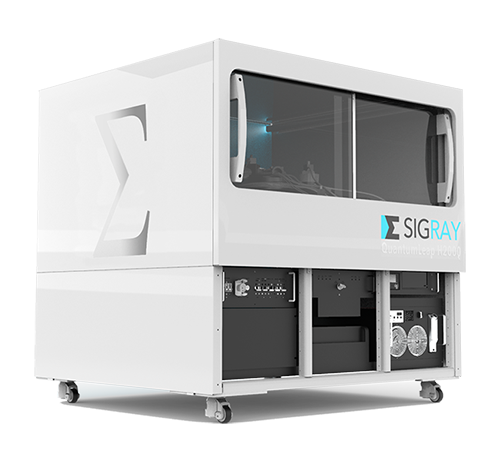
X-ray Absorption Spectroscopy System
Advanced Laboratory XAS System with transmission and fluorescence modes, covering 4.5 to 25 keV energy range
|
Options |
Downloads |
Contact |
|---|
Key Advantages:
- Only laboratory XAS system with synchrotron-like performance
Resolving power of over 6000 and high-quality EXAFS to k=15 - Fluorescence mode XAS
First laboratory fluorescence XAS, enabling routine XAS analysis of less than 1 wt.% concentrations - Energy range from 4.5 keV to 25 keV
Range encompasses transition metals such as titanium and platinum to actinides
________________________________
Achieve Synchrotron-Level Performance
Break free from the bottlenecks of traditional synchrotron access. QuantumLeap™ brings the power of high-resolution X-ray Absorption Spectroscopy (XAS)—previously confined to the synchrotrons—directly to your laboratory. No more lengthy proposal cycles, limited beamline time, or logistical delays, our spectrometers provide high quality data in minutes.
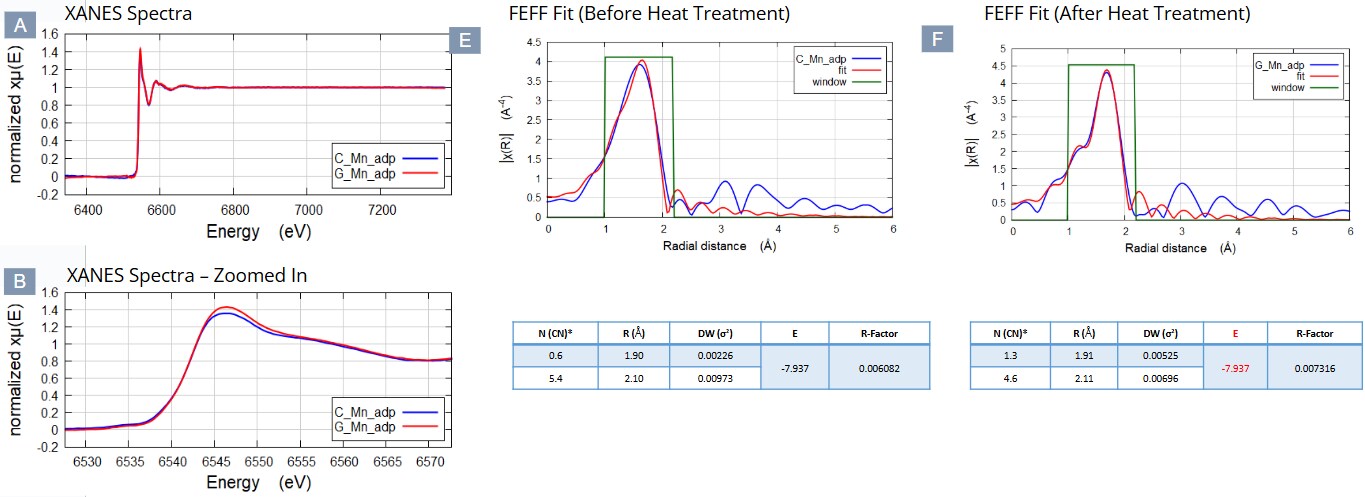
Pharmacology and Biochemistry – XANES and EXAFS of Mn with Adipate Ligand (Mn2Adp2) before (G-Mn-Adp) and after (C-Mn-Adp) heat shock (1 minutes at 240 C). XANES (A&B) shows no oxidation state change. FEFF analysis of EXAFS (C&D) shows there was a redistribution of coordination number of the long and short bonds (short bonds increased while long bonds decreased), but the octahedral geometry and presence of 6 oxygen atoms remained the same, indicating the adipate ligands remained intact
________________________________
Transmission and Fluorescence XAS Modes
X-ray Absorption Spectroscopy (XAS) reveals critical information about a material’s oxidation state, bonding environment, and the local atomic structure by measuring how X-rays are absorbed near an element’s absorption edge.
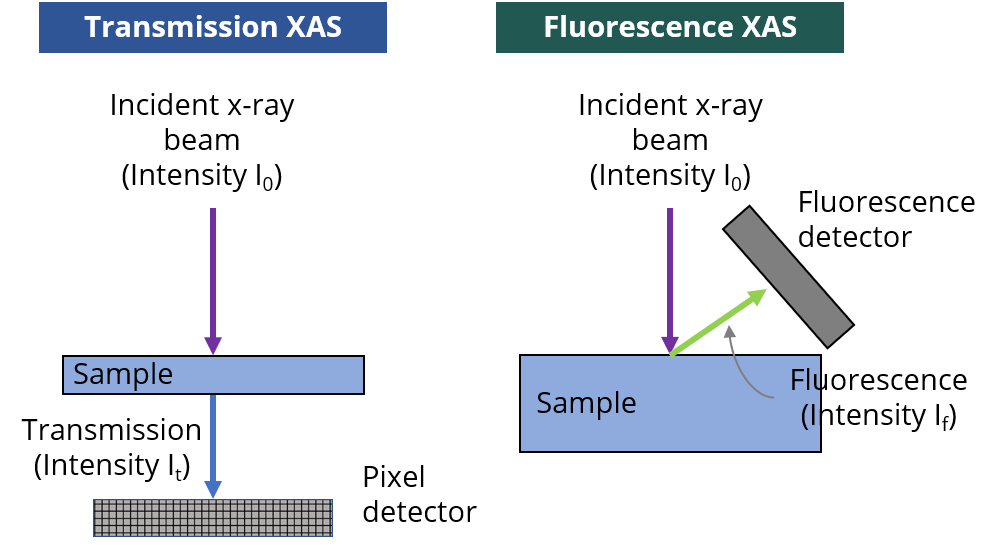
QuantumLeap™ supports both transmission and fluorescence modes of XAS:
- Transmission Mode: Measures X-rays that pass directly through a sample. Ideal for bulk materials or high-concentration samples.
- Fluorescence Mode: Detects photons emitted as atoms relax after X-ray excitation. Best for low-concentration elements (<1–5 wt%), thick samples, or samples on thick substrates.
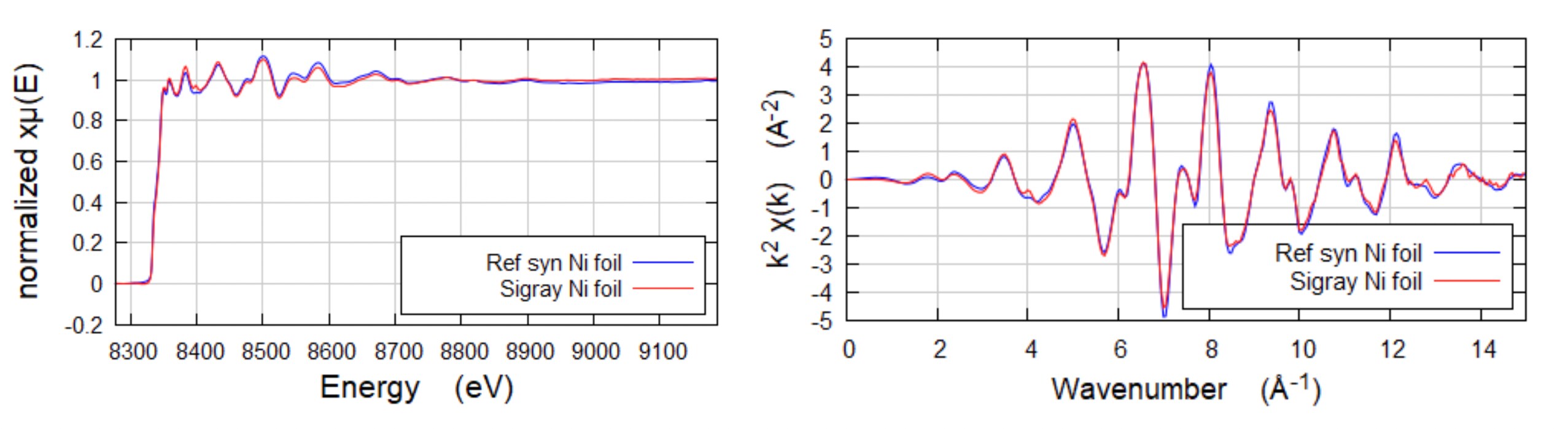
Both modes provide the same elemental and structural insights. However, fluorescence mode is essential for dilute or challenging samples—and this is where QuantumLeap™ excels. Thanks to the patented high-flux source and advanced detection system, QuantumLeap™ delivers reliable results for concentrations as low as 0.2–0.5 wt%.
For an in-depth look at fluorescence-mode performance, download the QuantumLeap™ Fluorescence XAS White Paper that cover:
- 2–5 wt% Mn and Co in NMC battery materials
- 0.5 wt% Pd, Pt, and W in catalyst samples
Resources:
Download Applications Note on QuantumLeap for LIBs
Download Applications Note on QuantumLeap for Co Speciation in NMCs
Download White Paper on Sigray Systems for Battery Science

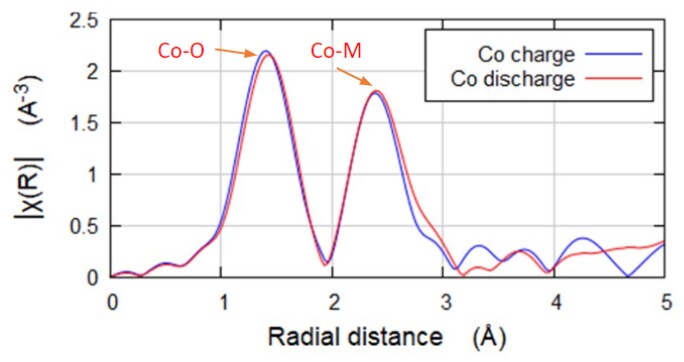
FT-EXAFS of low weight percentage (<3-5%) Co in NMC batteries acquired in fluorescence mode, showing the comparison of the charged and discharged state. The applications note can be found here.
_______________________
Energy Range from 4.5 to 25 keV
QuantumLeap is the only advanced lab system that operates at low Bragg angles, allowing full EXAFS acquisition from a single crystal—no stitching or multiple datasets required. In contrast, high Bragg angle systems (55°–85°) need many analyzers to cover the energy range and to maintain resolution, complicating operation. For example, at 85°, 1° of crystal rotation covers just 7 eV at 4.5 keV, making it impractical to scan wide energy ranges without sacrificing resolution or using many crystals. This adds manual steps, slows acquisition, and requires time-consuming data stitching.
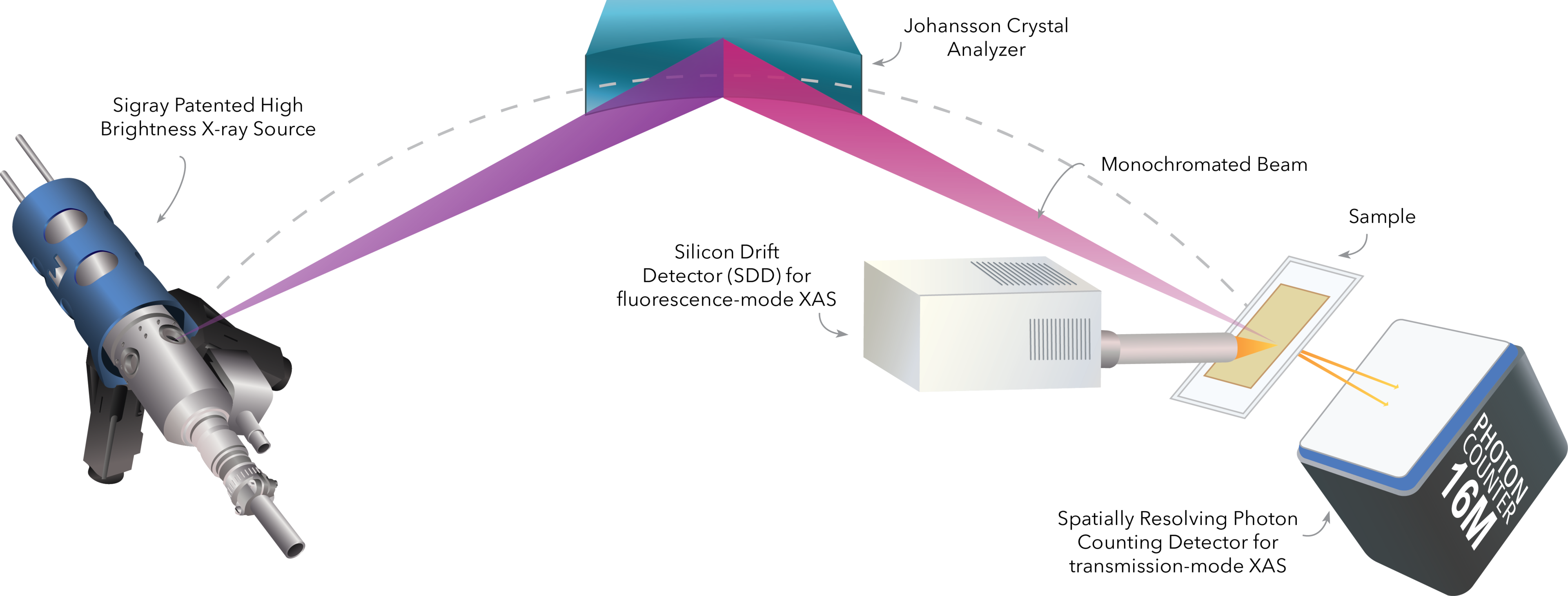
QuantumLeap uses a patented line focus x-ray source and achieves XAS acquisition at low Bragg angles, enabled by the use of Johansson x-ray crystals
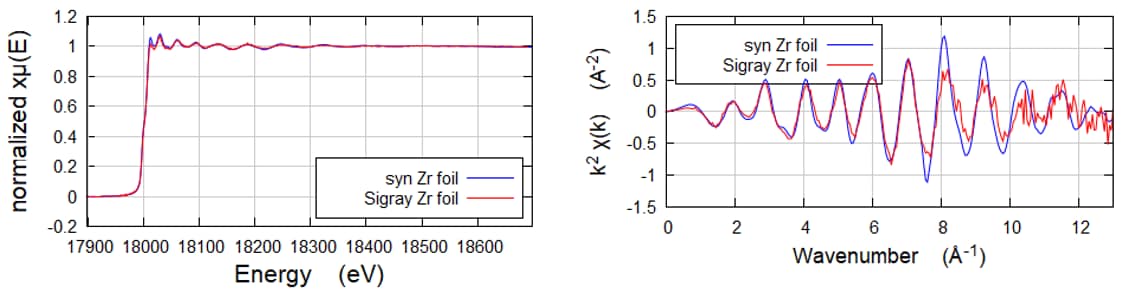
K-edge of Zirconium foil at its absorption K-edge of ~18 keV. QuantumLeap is uniquely capable of K edges of high Z elements (up to 25 keV).
Read about QuantumLeap’s high energy XAS capabilities in this applications note.
System Features
- Patented high brightness x-ray source with multiple targets, enabling high throughput and easy calibration
- Photon counting detector for high flux measurements
- Intuitive software for acquisition and analysis. Data can be read by Athena directly
________________________________________
Patented High Brightness X-ray Source with In-built Calibration Targets
Diamond-Enhanced Cooling: In-house design with target materials in direct thermal contact with diamond for superior heat dissipation, enabling higher power loading and brighter X-ray output.
Customizable Targets: Tailored target materials selected in collaboration with customers to match specific application needs.
Internal Spectral Calibration: First X-ray source to feature built-in calibration targets, enabling:
- More accurate energy calibration via spectral lines rather than absorption foils
- Higher energy resolution
- One-time, fully automated calibration—eliminating time-consuming, manual foil calibration required in other systems
Optimized for Fluorescence XAS: High brightness and small spot size support high-quality fluorescence-mode measurements. Please read more in the White paper.
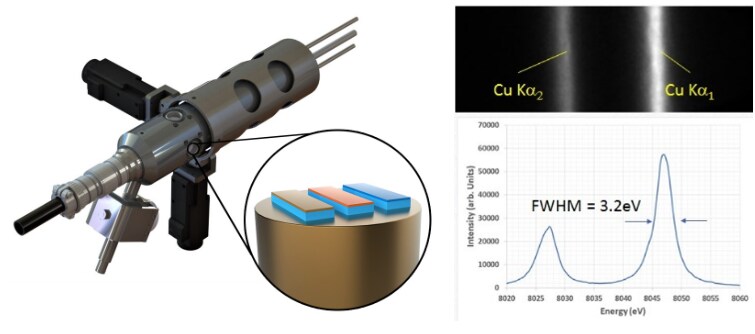
Patented QuantumLeap source (left) with multiple calibration targets. These calibration targets enable calibration based on the fluorescence line (right), which is far more precise and less time-consuming than the conventional approach of using absorption profiles of foils.
_____________________________
Photon Counting Detector in Transmission Mode
Patented Transmission XAS Approach: QuantumLeap™ uses a novel photon-counting detector—replacing conventional silicon drift detectors (SDDs)—for unmatched speed and precision.
Ultra-Fast Photon Counting: Detects each photon individually with energy thresholding to eliminate harmonic contamination.
Exceptional Throughput: Achieves up to 100 million counts/sec, over 500x faster than traditional SDDs (limited to ~0.5 million counts/sec).
Optimized for High Flux: Ideal for QuantumLeap’s high-flux transmission XAS measurements.
Versatile Operation: Fluorescence-mode XAS is supported using a conventional SDD, ensuring flexibility across applications.
________________
Software
QuantumLeap™ features an intuitive GUI for acquiring data, with minimal user intervention, including the capability to set up recipe-based scans for point-by-point mapping or multiple samples or multiple scans for operando experiments. Data can be exported as CSV files, which can be easily read into analytical software, including Athena and Artemis.
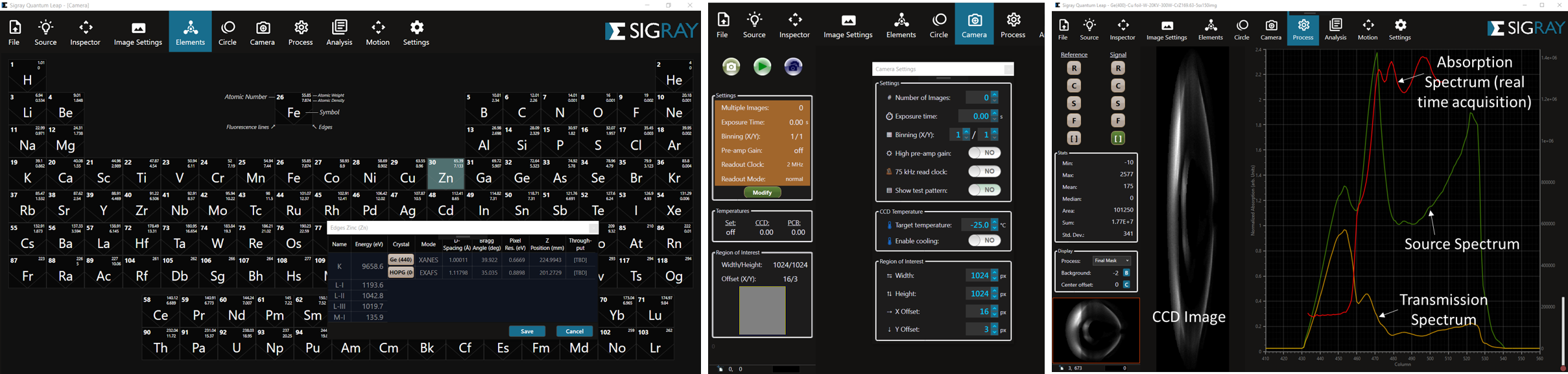
QuantumLeap™software follows an intuitive workflow in which the element of interest is selected, and suggested settings are loaded. Options such as exposure time and the number of images are then entered. The acquired spectrum is displayed in real time during collection.
Applications
______________
Catalysts
Why QuantumLeap™ for Catalysis?
- Synchrotron-Level Performance: Achieve high-resolution XANES and EXAFS without leaving the lab.
- Fluorescence XAS for Dilute Samples: Analyze precious metal catalysts at concentrations as low as 0.2 wt% Pt—beyond the capabilities of traditional lab-based transmission systems.
- High Signal-to-Noise, High Sensitivity: Ideal for challenging samples like supported or low-loading catalysts.
- Faster R&D Cycles: No more waiting months for beamline time—get real-time feedback to accelerate catalyst development.
QuantumLeap™ empowers catalyst researchers with the precision and accessibility they need to unlock new materials and optimize existing ones—right from the lab bench.
Get QuantumLeap™ white paper about fluorescence-geometry XAS capabilities here.
______________________
Batteries and Fuel Cells
Why QuantumLeap™ for Battery Research?
- Comprehensive Electrode Characterization: Analyze oxidation states, local atomic structure, and coordination changes across a wide range of materials.
- Ex-situ and In-situ Capability:
- Perform high-resolution ex-situ analysis of battery electrodes and electrocatalysts.
- Use optional in-situ / operando cells with integrated baffles and feedthroughs to study real-time structural evolution during cycling.
- Accelerate Material Development: Gain immediate feedback to guide formulation and improve performance—no more waiting for beamline time.
- Applicable Across Chemistries: From transition metal oxides to emerging anode materials, QuantumLeap™ supports all stages of LIB R&D.
With QuantumLeap™, battery researchers can go beyond surface-level characterization—unlocking atomic-level insights that drive innovation in energy storage. Check out our capabilities for optional in-situ cells to study changes operando.
Download: Cobalt Speciation in Low Wt % NMC Batteries
Download: NMC Chemistry During Charge Cycling

Mn oxidation states in NMC batteries, compared with standards of Mn and MnO2.
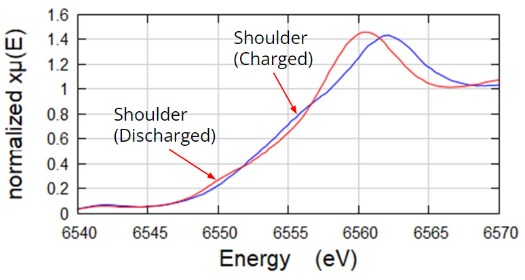
Fluorescence XAS of Mn K edge for charged and discharged NMC samples. The NMC samples were Ni-dominant, with only 2% Mn.
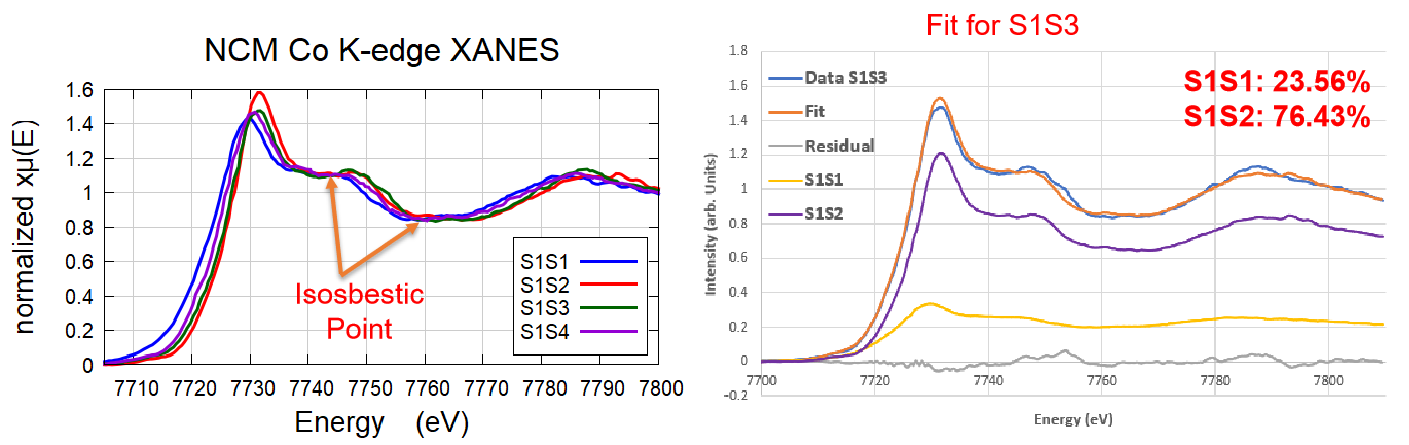
Isosbestic points seen in Co K-edge for four different samples with Co of <2% wt. A Least Squares Linear Combination Fitting was performed on the spectra which indicated two distinct species: S1S1 (most reduced) and S1S2 (most oxidized). S1S3 and S1S4 were comprised of the two distinct species.
___________________________
High Energy XAS (e.g., Lathanides)
Unlock Advanced Research on Heavy Elements
QuantumLeap’s high-energy spectroscopy-reaching up to 25 keV-makes it ideal for studying high atomic number elements like lanthanides, platinum, and palladium. This capability supports cutting-edge research in nuclear fuels and catalysts, as demonstrated in the figure on the right and applications note.
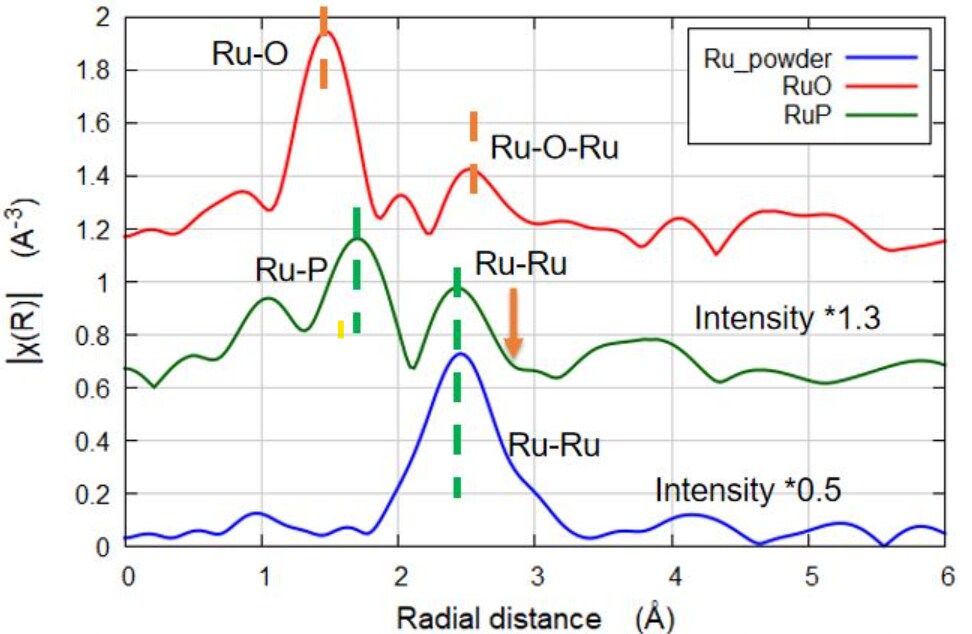
Various Ru formulations taken at the K-edge (22 keV), showing the power of Sigray QuantumLeap for high energy fluorescence-mode EXAFS measurements. Data was acquired at 3 hours (Ru powder), 4 hours (RuO2), and 4.5 hours (RuP)
Technical Specifications of the QuantumLeap Series
|
Parameter |
QuantumLeap 2050 |
QuantumLeap2100 |
|---|---|---|
|
E/ΔE (Energy Resolution)Overall |
>5000* |
5000-6000* |
|
Acquisition Modes |
Fluorescence or Transmission |
Fluorescence and Transmission |
|
Energy Range (keV) |
4.5 to 13 keV |
4.5 to 25 keV |
|
X-ray Source |
Patented long-lifetime x-ray tube with optimized spot geometry |
Patented long-lifetime x-ray tube with optimized spot geometry |
|
Target(s) |
Rh or W |
Rh and W |
|
Max Power |
200W |
300W |
|
Internal Calibration Targets |
Cr, Fe, Cu |
Cr, Fe, Cu |
|
X-ray Detectors |
Photon Counting Detector or |
Pixelated Photon Counting Detector and |
|
Optimal Focus at Sample |
100 µm x several mm, depending on slit size |
100 µm x several mm, depending on slit size |
|
Enclosure |
Steel Doors |
Transparent leaded glass or acrylic doors |
|
Training |
Basic (during installation) & Advanced Training (1-3 months post-installation) |
Basic (during installation) & Advanced Training (1-3 months post-installation) |
|
Computers |
Linux-based for Motion Control |
Linux-based for Motion Control |
*Acquired at approximately 8keV. The resolution can be increased for specific energy ranges through crystal selection and/or through x-ray source power adjustments.
Options
____________________
In-situ Cells
QuantumLeap is designed with feedthroughs and baffles for flexibility in designing and executing in-situ and operando experiments. We have a range of options to provide non-ambient conditions:
- Cryogenic Stage supporting <5 K to 420 K
- Heating and gas stage to study materials in fluorescence mode
- Fluid feedthroughs for Argon and O2
- Operando coin cell testing with paired potentiostat
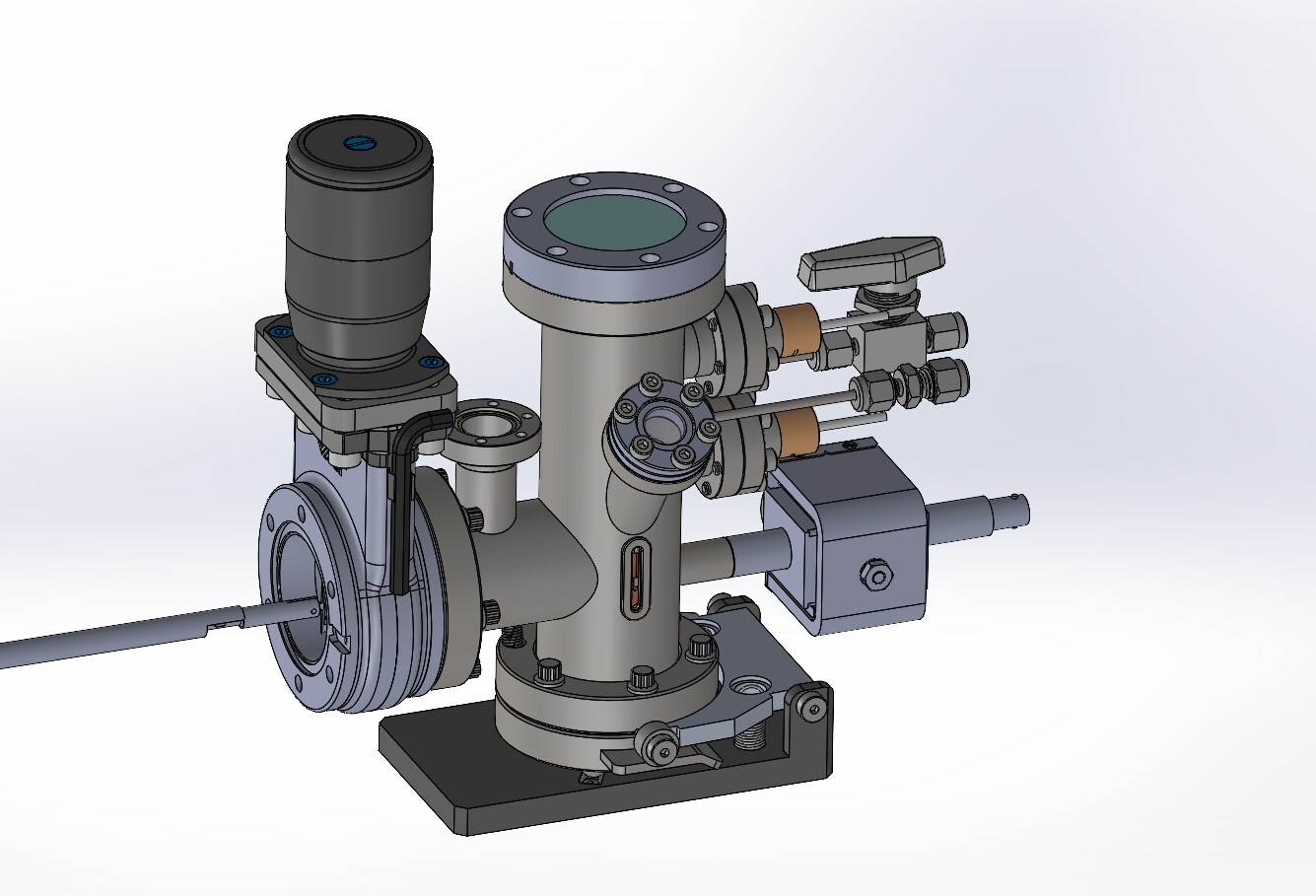
In-situ cell with ultrahigh vacuum sample environment and gas feedthroughs